Healthcare
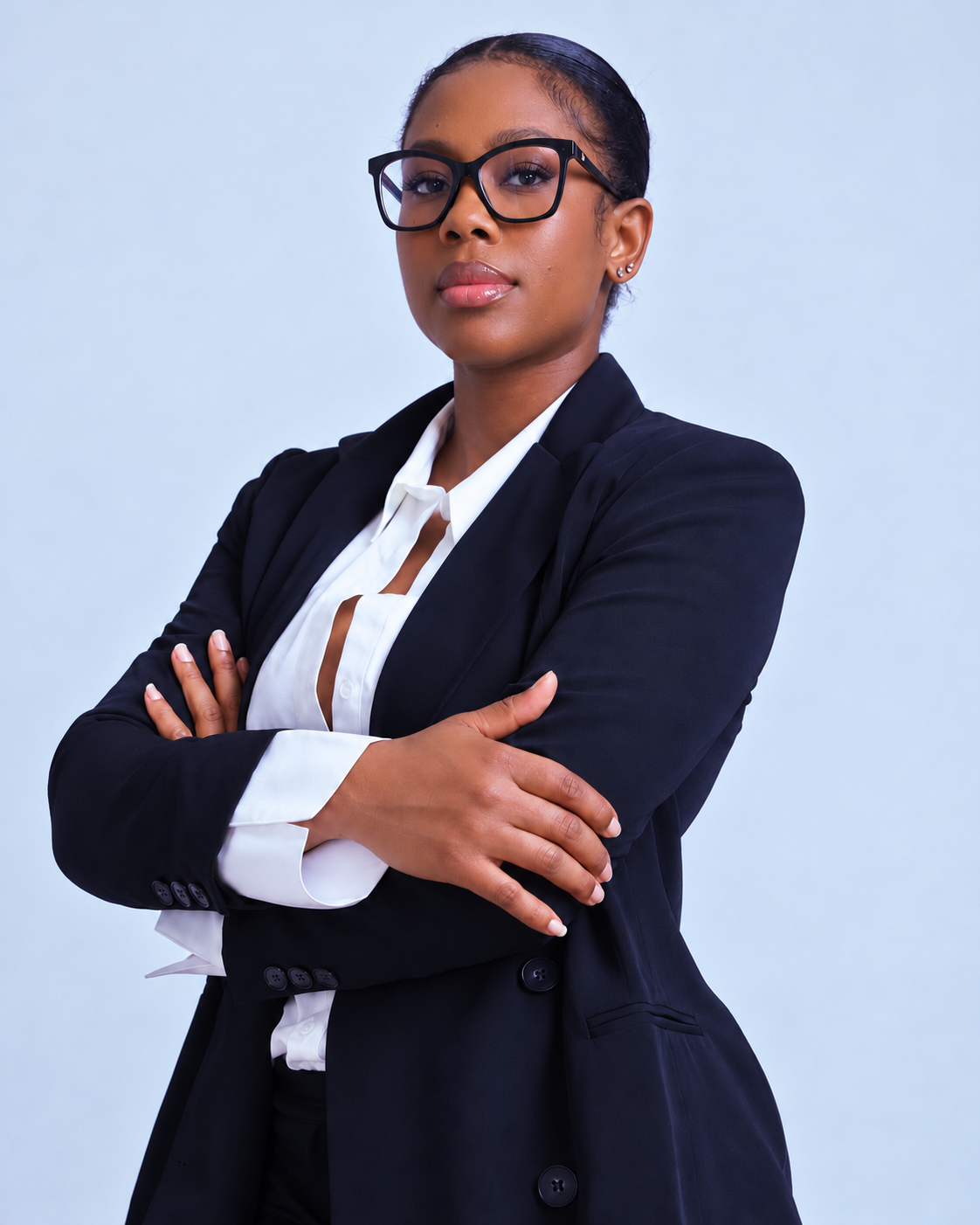
My background in direct patient care continues to shape how I approach healthcare technology.
Healthcare · Technology · Leadership
A quick overview of who I am and what I do.
My background in direct patient care continues to shape how I approach healthcare technology.
I work across software engineering and cloud computing with a focus on healthcare.
I founded Guinée HealthLink to support the future of healthcare in Guinea.
I am continuing my education in computer science and related technologies.
I am based in Maryland, USA, with strong personal and professional ties to Guinea.
“Caring for patients taught me what technology must never lose sight of: the person who needs care.”
Personal story
Caring for patients taught me to pay attention, ask better questions, and understand the person behind every problem. Those lessons still guide how I think about technology. I believe it should support clinicians, respect patients, and make care easier to navigate.
My clinical perspective keeps patient care at the center of my work.
I approach cloud systems with security, reliability, and practical use in mind.
I believe good software should make important work feel more straightforward.
Patient care taught me to listen before making decisions. I carry that lesson into every team and every project.
Mission
“I have seen how difficult it can be for a family to continue care when important medical information cannot be found. My mission is to make that information easier for authorized healthcare professionals to access, so patients and families do not have to begin again each time they need care.”
These are the experiences that shaped my path from bedside nursing to healthcare technology leadership.
My healthcare journey began as a Medical Assistant, where I developed a passion for patient care and learned the importance of compassion, communication, and teamwork in a clinical setting.
As a Clinical Technician, I gained hands-on experience supporting patient care, assisting healthcare teams, and working directly in fast-paced clinical environments. This experience strengthened my understanding of hospital operations and patient needs.
Becoming a Registered Nurse allowed me to take on greater clinical responsibility while caring for patients across emergency care, inpatient units, outpatient clinics, and medical-surgical settings. These years shaped my understanding of the challenges healthcare professionals face every day.
I wanted to address healthcare challenges beyond the bedside, so I moved into cloud computing and learned how secure cloud systems can better support healthcare organizations.
I learned software engineering so I could design secure healthcare platforms that make daily clinical work easier and help teams work more efficiently.
I founded Guinée HealthLink, bringing the different parts of my professional journey into one deeply personal project.
Today, I am continuing my computer science education while building Guinée HealthLink. Both are part of the same goal: learning how to create technology that responds to the healthcare challenges I have seen firsthand.
My education reflects the path I took from patient care into cloud computing and software engineering.
Academic education
University of Maryland Global Campus (UMGC)
My studies focus on software engineering, cloud computing, modern application development, cybersecurity, databases, networking, and healthcare technology.
Academic certificates
University of Maryland Global Campus
I completed this certificate as part of my Computer Science degree.
University of Maryland Global Campus
I completed this certificate as part of my Computer Science degree, focusing on modern web technologies, responsive design, user experience, and software development.
Professional license
I maintain my professional license as a Registered Nurse.
Industry certifications
Founder's vision
I am working toward a future where secure digital tools make healthcare more connected.
01 / Why
My inspiration for Guinée HealthLink did not come from my work in the United States. It came from returning home to Guinea after living in the United States for more than a decade.
When I returned, I expected to see how healthcare had evolved over the years. Instead, a series of personal experiences showed me how difficult it could be for families to navigate care when medical information was not easily accessible or connected.
One of those experiences involved my grandmother, who was living with Alzheimer’s disease. Our family understood that her condition was not necessarily curable, but we still wanted her to receive a proper evaluation and the best care possible.
We took her to the hospital, completed the payment process, and met directly with the doctor. Her examination took place in the doctor’s office, where the medical equipment and patient bed were also located. The doctor entered information into a computer, printed the documents, and gave us paper prescriptions and a paper referral for medical imaging.
We later misplaced the imaging referral. When we contacted the hospital to request another copy, we were told that we would need to return and see the doctor again because there was no patient record available to retrieve.
That experience stayed with me.
Another experience involved my young daughter while she was visiting Guinea. She became ill and was taken to a hospital. She was diagnosed and treated, but there was no complete medical record available afterward that clearly showed what medication had been administered.
When I called to ask what had been added to the medication she received, the hospital could not provide a clear answer because the treatment had not been recorded in a patient file. My daughter later returned to the United States for further evaluation and treatment.
Those experiences changed the way I looked at healthcare. I realized that patients, families, and healthcare professionals all deserve better access to medical information.
No family should have to start over because a paper referral was lost. No parent should struggle to understand the care their child received because there is no complete medical record.
That realization became the foundation for Guinée HealthLink.
02 / The vision
I created Guinée HealthLink to help healthcare organizations move toward secure, connected digital systems. I want healthcare teams to have better access to clinical information and easier ways to work together. I also know that each facility has its own needs, so the technology must be practical for the people using it.
03 / Building the future
I am building tools that help healthcare professionals spend more time on what matters most: caring for their patients. I make each decision with security, ease of use, growth, and long-term reliability in mind.
04 / Looking ahead
My long-term vision is to contribute to better healthcare systems in Guinea. I hope this work can give clinicians the information they need, improve patient care, and support thoughtful progress in healthcare across Africa.
What caring for patients and learning to build technology have taught me.
01
Working in direct patient care taught me how quickly a complicated process can take attention away from the patient. When I build technology, I think about the nurse, doctor, or staff member who will have to use it during a busy day. If it adds more work without making care easier, it is not solving the right problem.
02
Some of the most important things I learned in healthcare came from listening to patients, families, and the people working beside me. I carry that lesson into engineering. Before deciding what a system should do, I want to understand where the current process breaks down and what healthcare professionals actually need from it.
03
My family’s experiences in Guinea showed me that a healthcare system has to do more than work in one moment. Information must still be available when a referral is misplaced, when a patient returns, or when another healthcare professional needs to understand what happened. That is why I think about security, reliability, and long-term use from the beginning.
04
Moving from patient care into cloud computing and software engineering required me to learn unfamiliar skills and ask questions without pretending to know everything. I still approach new work that way. Nursing taught me one way to understand healthcare, and engineering continues to teach me another.
What I hope technology can change, and what it should never replace.
My view of healthcare technology comes from both sides of the work. I have cared for patients, and I have seen what families experience when important medical information cannot be found. Now that I build software, I think less about technology as an idea and more about what it could change in those everyday moments.
01
As a nurse, I know that clinical care depends on judgment, communication, and noticing what may not be obvious in a record. I do not see artificial intelligence as a replacement for any of that.
I am interested in the quieter work AI may be able to support, such as organizing information, assisting with documentation, and helping clinicians find relevant details more quickly. Used carefully, it could reduce some of the administrative work that pulls attention away from patients.
02
The need for connected healthcare became real to me when my family could not retrieve my grandmother’s imaging referral and when we could not get a complete record of the medication my daughter received.
A medical record should not disappear because a piece of paper is lost. The right information should be available to the authorized healthcare professional who needs it, while remaining protected from everyone who does not.
03
Medical records contain some of the most private information a person can share. Making that information easier for authorized healthcare professionals to access cannot mean treating privacy and security as an afterthought.
I want patients and families to understand why their information is being collected, how it is protected, and who is allowed to see it. If people cannot trust the system, the technology has failed them.
04
When I think about the future of healthcare, I think about practical differences. I think about a family being able to retrieve a referral, a parent being able to understand the treatment a child received, and a clinician having the information needed to continue that patient’s care.
I hope to contribute to that future through Guinée HealthLink. I want technology to strengthen the work of healthcare professionals while keeping patients, families, and trust at the center of the system.
Featured Project
A digital health platform shaped by what my family and I experienced while seeking care in Guinea.
Guinée HealthLink is the most meaningful project I have worked on.
It brings the different parts of my experience together around a problem I care about deeply.
My goal is to help healthcare professionals spend less time managing paperwork and more time caring for patients by creating secure, connected, and easy-to-use digital healthcare solutions.


Project highlights
Secure patient records that remain organized and accessible across authorized healthcare facilities.
Support for patient registration, appointments, consultations, admissions, discharge, and clinical workflows.
Digital laboratory orders and results integrated directly into the patient record.
Electronic prescriptions with pharmacy workflow support.
Digital imaging requests integrated into clinical workflows.
Cloud infrastructure helps the platform keep authorized patient information available without depending on a single paper record.
I am leaving room for future AI tools that could assist with documentation and help clinicians find relevant information, without replacing their judgment or responsibility for patient care.
Future support for national health reporting, disease surveillance, and healthcare analytics for authorized public health organizations.
Technology alone does not improve healthcare.
The people who care for patients do.
My goal is to build technology that helps them do it even better.
Let's connect
I welcome conversations about healthcare technology, digital health, software engineering, cloud computing, public health innovation, artificial intelligence in healthcare, and the future of healthcare in Africa.
I am especially interested in connecting with healthcare leaders, hospitals, clinics, public institutions, technology professionals, students, and organizations working toward better healthcare systems.
Primary contact
For professional inquiries, collaborations, speaking opportunities, and conversations about healthcare technology.
sohnaoulare21@gmail.comSend Me an EmailThank you for visiting.
If something in my story connects with work you are doing, I would be glad to continue the conversation.